Solana Bridged USDC Comparison - 2023 Edition
If you’re planning on using USD Coin (USDC) on the Solana blockchain, one of the first things you’ll notice is the plethora of USDC variants available. This article breaks down the various types of USDC to provide a clearer understanding.
Native USDC
This token, issued by Circle, stands as the sole original or native USDC on Solana. You can deposit this token with Circle in exchange for US dollars.
Bridged USDC
In contrast, you might come across USDC variants with names like USDCbs, aaUSDC, and so on. The following image from the Saber exchange illustrates this.
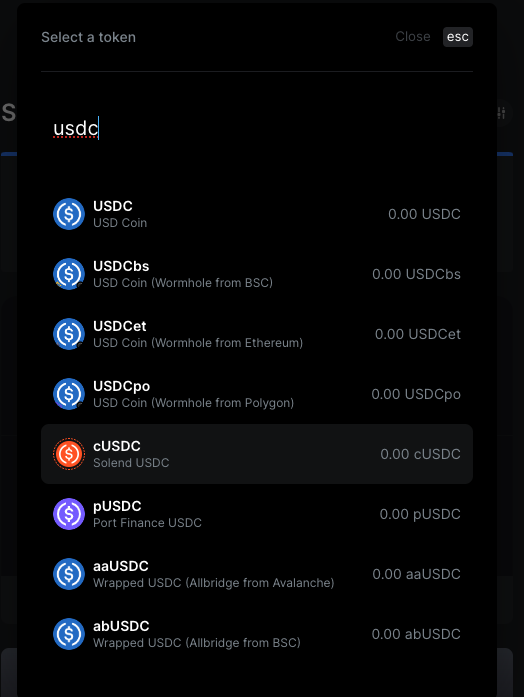
These variants represent specific “bridged” USDCs from a certain bridge on a particular network. Essentially, a user deposits a USDC token on another network using that bridge, and the bridge locks up those tokens. In return, it creates an equivalent amount of new tokens on Solana, which are called “IOU tokens”. These IOU tokens serve as a claim check on the original USDC tokens, permitting usage on Solana while the actual USDC remains on the original network.
Why Should This Matter to You?
This information is particularly relevant if you intend to bridge USDC from another blockchain to Solana, as each bridged USDC has a different exchange rate compared to the native USDC. Moreover, holding a bridged USDC carries a risk associated with the bridge. If the bridge were to be compromised, your IOU token might lose its value as it’s a promise of debt, not the actual USDC token.